Prepare the Potatoes: Peel the potatoes and slice them uniformly thin, about 1/8-inch thick. A mandoline slicer works best for this. Place the sliced potatoes in a large bowl and cover with cold water. Let them soak for 15-20 minutes to remove excess starch. Drain thoroughly and pat the potatoes completely dry with paper towels. This step is crucial for crispy, non-soggy potatoes. Season the dried potato slices lightly with salt and pepper.
Cook the Bacon: In a large skillet, cook the bacon over medium heat until crispy. Remove the bacon, place it on a paper towel-lined plate to drain excess grease, then crumble it once cooled. Reserve about 1 tablespoon of bacon fat in the skillet.
Make the Cheese Sauce: In the same skillet with the reserved bacon fat (or add butter if needed), melt 2 tablespoons of unsalted butter over medium heat. Add the chopped yellow onion and cook until softened, about 3-4 minutes. Add the minced garlic and cook for another minute until fragrant. Sprinkle in the all-purpose flour and whisk constantly for 1 minute to create a roux.
Gradually whisk in the whole milk and heavy cream, ensuring no lumps form. Continue whisking until the sauce thickens and comes to a gentle simmer, about 5-7 minutes. Remove from heat. Stir in 1 cup of shredded cheddar cheese and 1/2 cup of shredded Monterey Jack cheese until melted and smooth. Season the sauce with 1 teaspoon salt, 1/2 teaspoon black pepper, smoked paprika, and a pinch of cayenne pepper (if using). Taste and adjust seasonings as needed.
Preheat Oven and Prepare Baking Dish: Preheat your oven to 375°F (190°C). Lightly grease a 9×13-inch baking dish with cooking spray or butter.
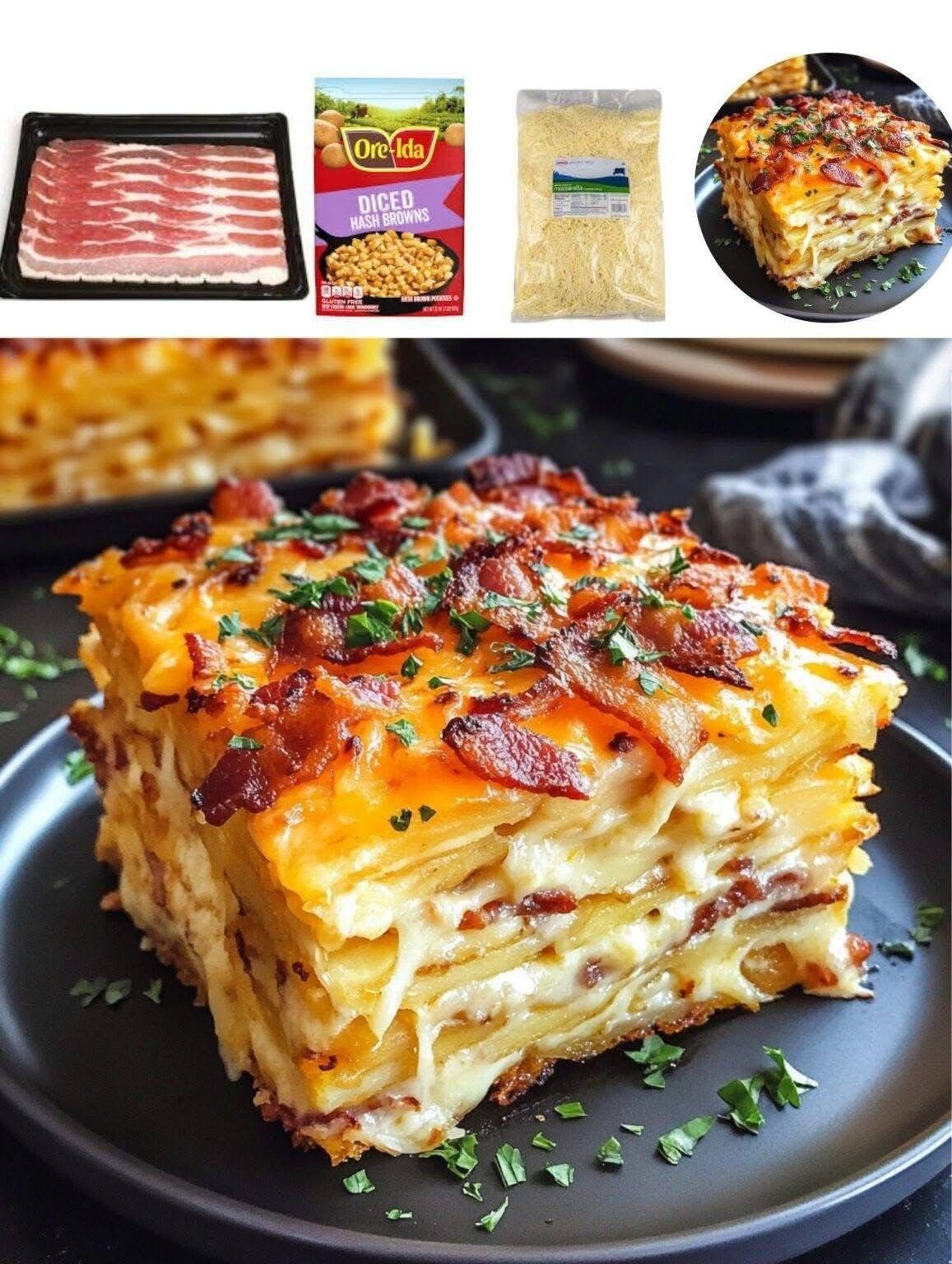
Assemble the Casserole: Spread about 1/4 cup of the cheese sauce on the bottom of the prepared baking dish. Arrange one-third of the dried potato slices in an even layer over the sauce, slightly overlapping.
Spoon about one-third of the remaining cheese sauce evenly over the potato layer. Sprinkle with one-third of the crumbled bacon, and then one-third of the remaining shredded cheddar and Monterey Jack cheeses.
Repeat the layering process two more times: potatoes, cheese sauce, bacon, and cheese. Ensure the top layer of potatoes is covered generously with the remaining cheese sauce and a final sprinkle of the remaining shredded cheeses.
Bake the Casserole: Cover the baking dish tightly with aluminum foil. Bake for 45 minutes.
Remove the foil and continue baking for another 25-35 minutes, or until the potatoes are tender when pierced with a fork and the top is golden brown and bubbly. If the top is browning too quickly, you can loosely tent it with foil.
Rest and Serve: Once baked, remove the casserole from the oven and let it rest for at least 10-15 minutes before slicing and serving. This allows the layers to set, preventing it from falling apart. Garnish with fresh chopped parsley or chives before serving.
Cooking Tips and Variations
Potato Perfection: Using a mandoline slicer is highly recommended for uniformly thin potato slices. This ensures even cooking and a beautiful presentation. Rinsing the potatoes removes excess starch, which can make your casserole gummy. Drying them thoroughly is critical; wet potatoes will steam rather than bake, leading to a watery dish. Russet potatoes are ideal for their starch content, which helps create that creamy texture, but Yukon Golds can also be used for a slightly waxier, richer potato flavor.
Cheese Choices: Don’t be afraid to experiment with your cheese blend! Sharp cheddar provides a robust flavor, while Monterey Jack offers excellent meltability. Other great options include Gruyere for a nutty depth, Colby Jack for a milder cheddar taste, or even a touch of smoked gouda for an extra layer of flavor. Always grate your own cheese from a block; pre-shredded cheeses often contain anti-caking agents that can affect melt and texture.
Bacon Bliss: For the crispiest bacon, cook it in a skillet until well-rendered and deeply golden. Avoid overcooking to the point of bitterness, but ensure it’s firm enough to hold its texture within the casserole. If you prefer, you can bake the bacon on a wire rack set over a baking sheet at 400°F (200°C) for 15-20 minutes for easier cleanup.
Make-Ahead Magic: This casserole is an excellent make-ahead option. Assemble the entire dish, cover it tightly with plastic wrap, and refrigerate for up to 24 hours. When ready to bake, remove it from the refrigerator 30 minutes before baking to allow it to come closer to room temperature. You may need to add an extra 10-15 minutes to the initial covered baking time.
Creamy Sauce Secrets: The roux (butter and flour mixture) is key to a smooth, thick sauce. Whisk constantly when adding the milk and cream to prevent lumps. Cook the sauce until it’s thick enough to coat the back of a spoon. Don’t skip the seasoning here; a well-seasoned sauce will infuse flavor throughout the entire dish.
Variations for Customization:
Add Vegetables: Sautéed bell peppers (red or green), diced zucchini, or spinach can be added to the layers for extra nutrition and flavor. Add them to the cheese sauce or sprinkle them between potato layers.
Spice it Up: For more heat, increase the cayenne pepper, or add a pinch of red pepper flakes to the sauce. A dash of hot sauce over the top when serving is also fantastic.
Herbaceous Notes: Beyond parsley or chives, fresh thyme or rosemary can be lovely additions, especially when paired with potatoes. Stir them into the cheese sauce or sprinkle between layers.
Protein Boost: For an even heartier meal, consider adding cooked, crumbled breakfast sausage or diced ham to the layers alongside the bacon.
Different Dairy: For a richer sauce, you can use all heavy cream, or for a lighter version, use a blend of milk and half-and-half.
Storage and Reheating
Storage: Leftover Cheesy Bacon Hashbrown Breakfast Casserole can be stored in an airtight container in the refrigerator for up to 3-4 days. Ensure it cools completely before refrigerating to prevent condensation.
Freezing: While possible, freezing may slightly alter the texture of the potatoes, making them a bit softer. To freeze, allow the baked casserole to cool completely. Cut into individual portions or leave whole. Wrap tightly in plastic wrap, then in aluminum foil. It can be frozen for up to 2-3 months. Thaw overnight in the refrigerator before reheating.
Reheating:
Oven: This is the best method for reheating, as it helps restore some crispness. Preheat your oven to 325°F (160°C). Place individual portions or the entire casserole in an oven-safe dish, cover loosely with foil, and bake for 20-30 minutes (longer for a whole casserole) or until heated through and bubbly. Remove foil for the last 5-10 minutes if you want to re-crisp the top.
Microwave: For quick reheating of individual portions, place a slice on a microwave-safe plate. Heat on medium power for 1-2 minutes, or until hot. Be aware that the microwave may make the potatoes a bit softer and the cheese less crispy.
Skillet: For individual slices, you can reheat them in a lightly greased skillet over medium-low heat. Cover the skillet to help heat through, then uncover to crisp up the bottom. This method works well for restoring some texture.
Frequently Asked Questions
Can I use frozen shredded hashbrowns instead of fresh potatoes?
While you can, the texture will be different. This recipe is designed for thinly sliced potatoes which create a gratin-like, layered structure. Frozen shredded hashbrowns will result in a more traditional, looser hashbrown casserole texture. If using frozen shredded hashbrowns, ensure they are completely thawed and squeezed very dry to remove all excess moisture before mixing with the sauce and layering.
How do I prevent my casserole from being watery?
Several key steps prevent a watery casserole: first, soak your thinly sliced potatoes in cold water and then pat them absolutely dry. This removes starch and excess moisture. Second, ensure your cheese sauce is thick enough to coat the back of a spoon before layering. Finally, make sure the casserole bakes long enough, uncovered, to allow any remaining moisture to evaporate and for the top to brown beautifully.
Can this casserole be made dairy-free or gluten-free?
Making it dairy-free would require significant substitutions, including dairy-free milk, cream, and cheese alternatives, which may alter the flavor and texture significantly. For a gluten-free version, simply substitute the all-purpose flour in the cheese sauce with a gluten-free all-purpose flour blend (one that contains xanthan gum works best) or cornstarch (use half the amount of cornstarch as flour).
What are some good side dishes to serve with this casserole?
This casserole is quite hearty on its own, but it pairs wonderfully with lighter fare. Consider serving it alongside a fresh fruit salad, a simple green salad with a light vinaigrette, or some scrambled or fried eggs for extra protein. A side of hot sauce or a dollop of sour cream or Greek yogurt can also be delicious additions.