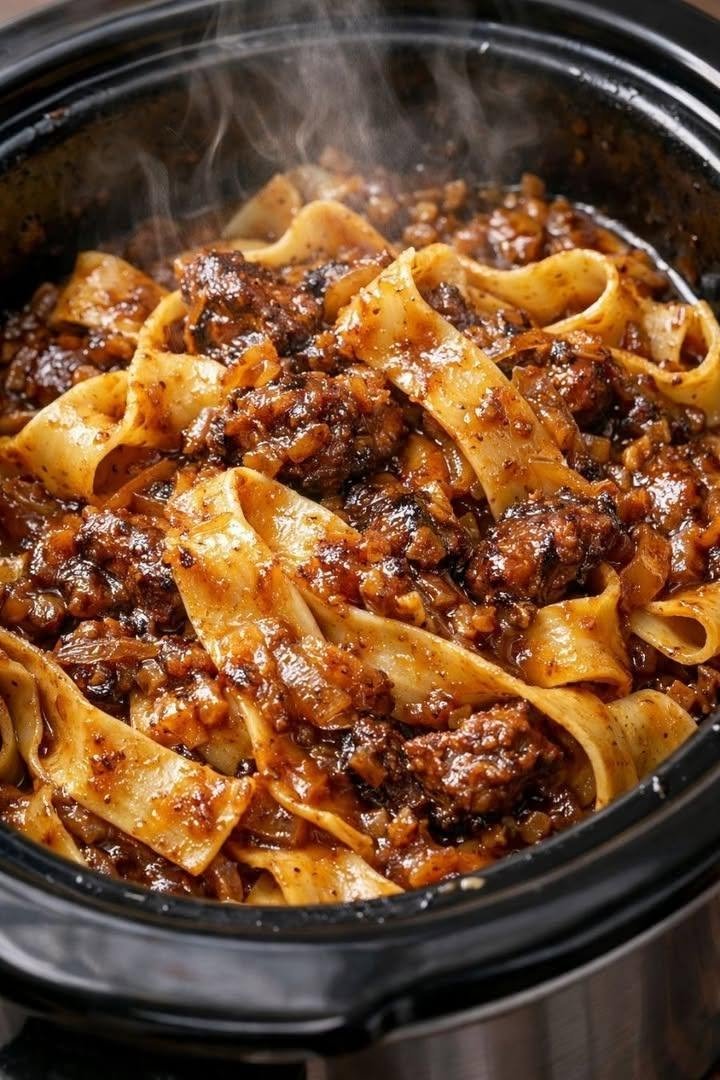
Place the lid on the slow cooker and cook on LOW for 7 to 8 hours, or on HIGH for 4 to 5 hours. The longer, lower cooking time is preferred if you have it available — the beef becomes more tender and the sauce develops more complex flavor over 7 to 8 hours on LOW than it does over the shorter HIGH setting. By the end of the cooking time, the beef should be completely tender and beginning to fall apart at the edges, and the sauce should be thick, dark, glossy, and deeply fragrant with caramelized onion and savory beef aromas.
Step 3: Add the Noodles
About 30 to 40 minutes before you are ready to serve, add the dry wide egg noodles directly to the slow cooker. Stir gently to submerge the noodles as much as possible in the hot, savory sauce. Place the lid back on and cook on HIGH for 20 to 30 minutes, stirring once halfway through, until the noodles are tender and have absorbed a significant amount of the sauce. Keep a close eye on the noodles during this stage — they can go from perfectly al dente to overly soft relatively quickly in the slow cooker’s trapped heat environment, and you want them fully cooked but still with a little body to them.
Step 4: Rest and Serve
Turn the slow cooker to WARM, cover, and allow the noodles to rest for 5 minutes so they can finish absorbing the sauce and everything can settle together. Remove the lid, give everything a final gentle toss, and serve the noodles and beef directly from the slow cooker while piping hot and steaming. The sauce should cling beautifully to every noodle and piece of beef, with just enough liquid remaining to keep everything moist and saucy rather than dry.
What to Serve Alongside
Because the main dish is rich, starchy, and deeply savory, the ideal accompaniments are simple and light enough to provide some contrast without competing with the flavor of the noodles and beef. A few options that work particularly well:
Steamed or roasted broccoli — the slight bitterness and fresh green flavor of broccoli is a natural counterpoint to the rich beef gravy, and it takes almost no effort to prepare
A simple green salad with a bright vinaigrette — the acidity of a good vinaigrette cuts through the richness of the sauce and refreshes the palate between bites
Sliced cucumbers with a splash of vinegar and a pinch of salt — quick, cool, and acidic, they serve the same palate-cleansing function as a salad with even less preparation required
Warm crusty bread or dinner rolls — not for lightening the meal, but for the deeply satisfying purpose of swiping up every last drop of that savory gravy from the bottom of the bowl
Useful Variations and Simple Swaps
The beauty of a four-ingredient recipe is its simplicity — but even within that simplicity, there is room for small, meaningful adjustments that keep the spirit of the dish intact while adapting it to what you have on hand or what your household prefers.
For the beef, boneless chuck roast cut into large chunks is the best alternative to pre-cut stew meat, providing the same collagen-rich, deeply flavored result after long cooking. Pork shoulder works beautifully in this recipe as well, producing a slightly sweeter, richer flavor that pairs just as harmoniously with the French onion soup base.
For the soup component, if you cannot find condensed French onion soup, two cans of condensed cream of mushroom soup can stand in for both cans, though the flavor will be earthier and less onion-forward. Using one can of French onion and one can of cream of mushroom — which is already called for in the original recipe — is a balanced combination that most people find works extremely well. A can of condensed beef broth with a packet of dried onion soup mix stirred in can also substitute in a pinch.
For the noodles, any wide, flat pasta works in place of egg noodles — pappardelle, fettuccine broken into shorter lengths, or even broad lasagna noodles snapped into thirds will all absorb the sauce effectively. Avoid very thin pasta, which can overcook quickly and dissolve into the sauce rather than maintaining enough structure to be satisfying.
For a slightly more complex version that still keeps the dish firmly in four-ingredient territory when you are shopping, stir in one cup of sliced mushrooms or a handful of diced onions under the beef before adding the soups. The mushrooms or onions deepen the savory character of the finished dish without complicating the cooking process in any meaningful way.
Storing and Reheating Leftovers
Leftovers reheat very well, which makes this recipe genuinely practical for busy weeks when having a ready meal on standby matters. Store cooled leftovers in an airtight container in the refrigerator for up to 4 days. The sauce will thicken considerably as it cools and the noodles continue to absorb liquid overnight — this is normal and expected.
To reheat, place the desired portion in a skillet over low to medium-low heat and add a spoonful or two of water or beef broth to loosen the sauce back to its original consistency. Stir gently and heat until warmed through. Alternatively, reheat in the microwave in a covered dish with a small splash of water, stirring once halfway through. The beef will become even more tender after a night in the refrigerator, which means the leftover version is arguably even better than the first serving.
Why the Slow Cooker Makes This Possible
There is something almost philosophical about what a slow cooker does for a recipe like this one. It takes ingredients that would require significant attention, technique, and active cooking time on the stovetop — searing meat, building a sauce, deglazing, reducing, adjusting — and converts all of that effort into a single passive activity: waiting. The low, consistent, gentle heat of the slow cooker over many hours accomplishes something that high heat over a short time cannot: it gradually breaks down the tough connective tissue in cheaper cuts of beef, converting collagen to gelatin and releasing it into the surrounding liquid, which is precisely what creates that thick, glossy, clinging sauce. No skill required. No attention required. Just time.
For households with busy schedules, the slow cooker is not just a convenience — it is a genuine solution to the daily problem of wanting to eat well without having the time or energy to cook properly after a full day. A recipe like this April showers supper proves that four ingredients, ten minutes of morning effort, and a reliable slow cooker are all that stand between an ordinary Tuesday evening and a genuinely satisfying, deeply comforting home-cooked meal.
Final Thoughts
If you are looking for the kind of recipe that you can return to again and again through the rainy weeks of spring — and through busy evenings in any season — this four-ingredient slow cooker ribbon noodle supper deserves a permanent place in your rotation. It asks almost nothing of you and gives back a meal that is warm, filling, genuinely delicious, and exactly the kind of thing you want to come home to on an evening when the weather is gray and the day has been long. Make it once and you will understand why it keeps getting made.
For Complete Cooking STEPS Please Head On Over To Next Page Or Open button (>)