As it decomposes, it holds more moisture and reduces airflow around the roots.
Most orchids benefit from repotting every one to three years, depending on the potting medium.
Fresh orchid bark helps maintain healthy roots.
Healthy Roots Mean Healthy Flowers
Healthy orchid roots are usually:
Firm
Thick
Green when moist
Silvery when dry
Roots that appear:
Brown
Mushy
Hollow
may indicate rot.
Removing damaged roots and repotting in fresh bark can help restore plant health.
How to Encourage a New Flower Spike
If your orchid has finished blooming:
Continue providing bright indirect light.
Water consistently.
Fertilize lightly during active growth.
Allow slightly cooler nights in autumn.
Be patient.
New flower spikes often emerge several months after the previous blooms fade.
Common Orchid Care Mistakes
Many blooming problems result from simple care errors.
Avoid these common mistakes:
Watering too often
Keeping roots constantly wet
Using ordinary potting soil
Providing too little light
Fertilizing excessively
Leaving water in the crown
Ignoring root health
Correcting these issues often leads to healthier plants.
Frequently Asked Questions
How often do orchids bloom?
Most common Phalaenopsis orchids bloom once a year, although flowers may last several months.
Should I cut the flower spike?
It depends.
If the spike remains green, some growers leave it in place because it may produce secondary blooms.
If it turns brown and dries out, it can usually be trimmed near the base.
Can coffee grounds help orchids?
Coffee grounds are generally not recommended for orchids because they may alter the growing medium and encourage fungal growth.
Is rainwater better than tap water?
Many orchids tolerate rainwater well.
If your tap water is heavily softened or contains high mineral levels, rainwater or filtered water may be beneficial.
Why are my orchid’s leaves healthy but there are no flowers?
Insufficient light is one of the most common reasons.
Review your growing conditions before assuming the plant needs additional fertilizer.
Expert Tips for Long-Lasting Blooms
To enjoy flowers for as long as possible:
Keep the plant away from heating vents.
Avoid cold drafts.
Maintain steady temperatures.
Water consistently.
Don’t move the orchid frequently once buds appear.
Stable conditions reduce stress and help flowers last longer.
Final Thoughts
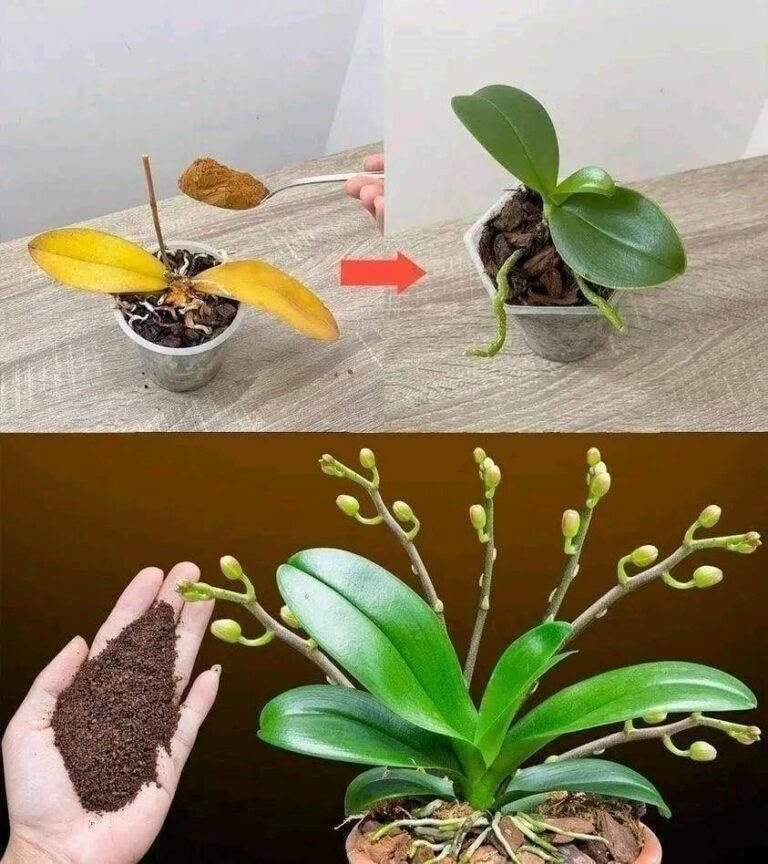
Orchids have earned a reputation for being difficult plants, but in reality, they simply have specific needs. While viral posts often promise dramatic results from a mysterious teaspoon of homemade solution, there is no scientifically proven shortcut that can replace proper orchid care.
The secret to abundant blooms lies in providing bright indirect light, watering only when needed, maintaining healthy humidity, using a balanced orchid fertilizer, and allowing natural seasonal temperature changes. These practices support healthy roots, vigorous growth, and reliable flowering far more effectively than unproven home remedies.
If your orchid hasn’t bloomed in a while, don’t be discouraged. With patience, consistent care, and the right environment, many orchids reward their owners with spectacular flowers year after year. Rather than searching for miracle cures, focus on meeting your orchid’s basic needs—and let nature do the rest.
For Complete Cooking STEPS Please Head On Over To Next Page Or Open button (>)